Product Roadmap
Where WorkSmart goes next — Now / Next / Later, the technical evolution from deterministic mock AI to real LLMs behind an unchanged seam, and three forward-looking UI concepts.
Contents
01Now
Shipped and in use through Phase 5.
Time tracking, with depth
The check-in grammar, multi-user data, keyset pagination, and a virtualized list that stays fast at 1,000+ entries; insights by tag, date, department, and user.
Auth, roles, and the GenAI seam
Clerk authentication with an offline dev bypass and access roles; the five AI touchpoints wired through the api — Categorization, Document Analysis, Search, Anomaly Detection, and the Project Status Narrative.
Documents and project management
Presigned, direct-to-storage document uploads with status tracking and check-in linking; projects and tasks on a board, with logged time rolling up through a nullable task link.
Containerized deploy
The whole stack as one docker compose shape on a single EC2 host, with a manual-trigger CI gate and an OIDC → ECR → SSM deploy.
02Next
The near-term build — deepening the control-system foundation.
Admin portal
Role-gated team analytics, member and access-role management, and a document approval queue — see the concept below.
Lower-friction logging
Freeform and voice check-in: describe a day in plain language (or speak it) and have the AI split it into structured, confirmable entries.
Real LLM inference
Swap the deterministic mocks for real models inside tm-worksmart-ai-service, behind the existing contract — see the technical evolution.
03Later
The full project-control-system vision.
Outcome / confidence layer
Track confidence in hitting outcomes, not just task status.
Cross-team dependency control
Make inter-team dependencies explicit and manageable.
Capacity-realism engine
Ground plans in logged-hour reality so commitments are achievable.
Native RAID + decision log
Risks, assumptions, issues, dependencies, and decisions captured in-product.
04Technical evolution
From deterministic mock to real LLMs — without touching the rest of the app.
Every AI feature already runs end-to-end through one seam: shared Zod contracts → the api's aiClient → tm-worksmart-ai-service. The "mock" is deterministic inference, not fake plumbing. Becoming real means changing logic inside the service while the wire contract, the api routes, the validation, and the UI all stay exactly as they are.
The api is the only caller of the service and validates every response against Zod before trusting it. Graceful degradation (timeout → 504, upstream → 502) already exists, so a real model's added latency or flakiness is handled the same way the mocks' is today.
05Concept mockups
Forward-looking UI — non-functional concepts, not shipped features.
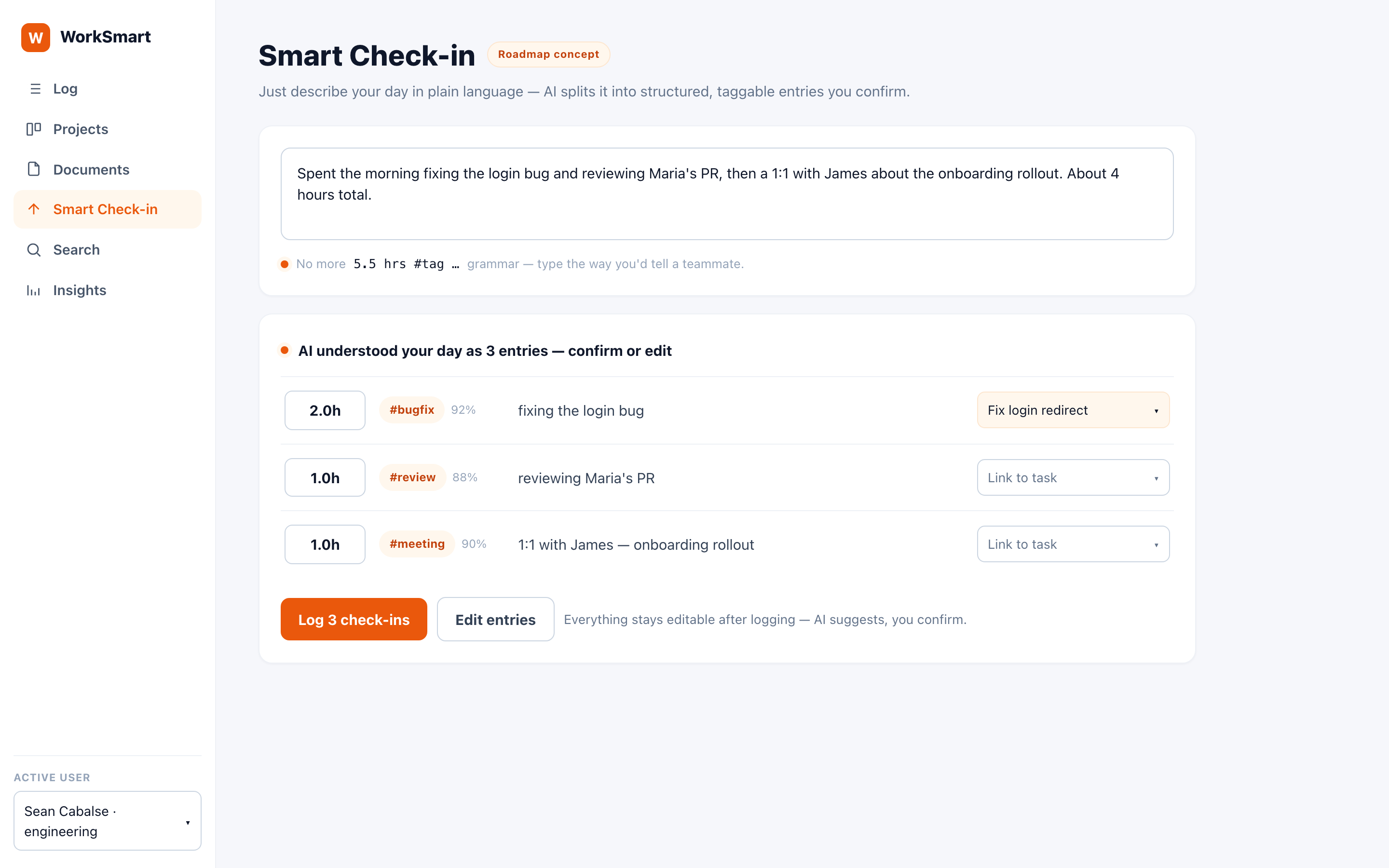
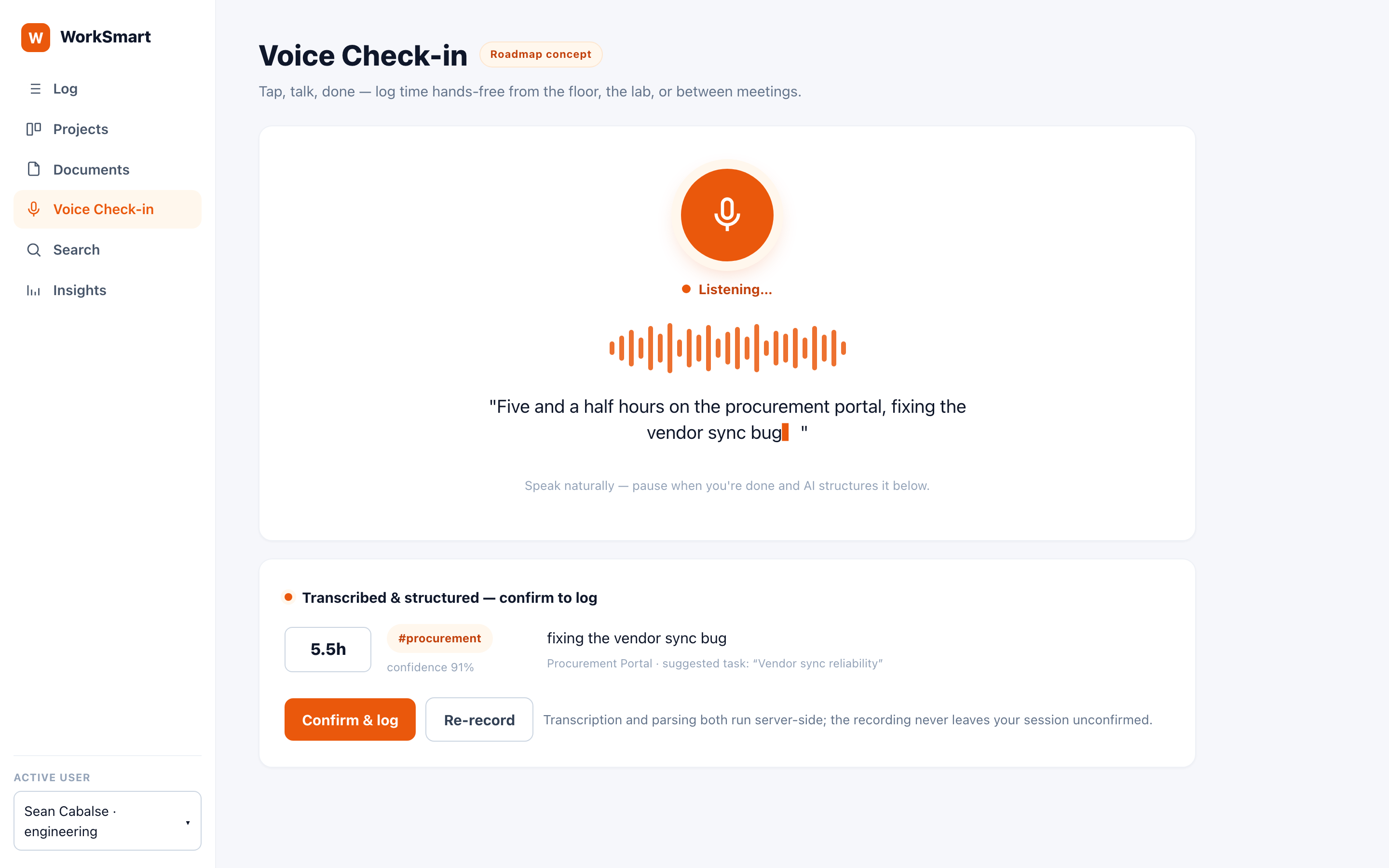
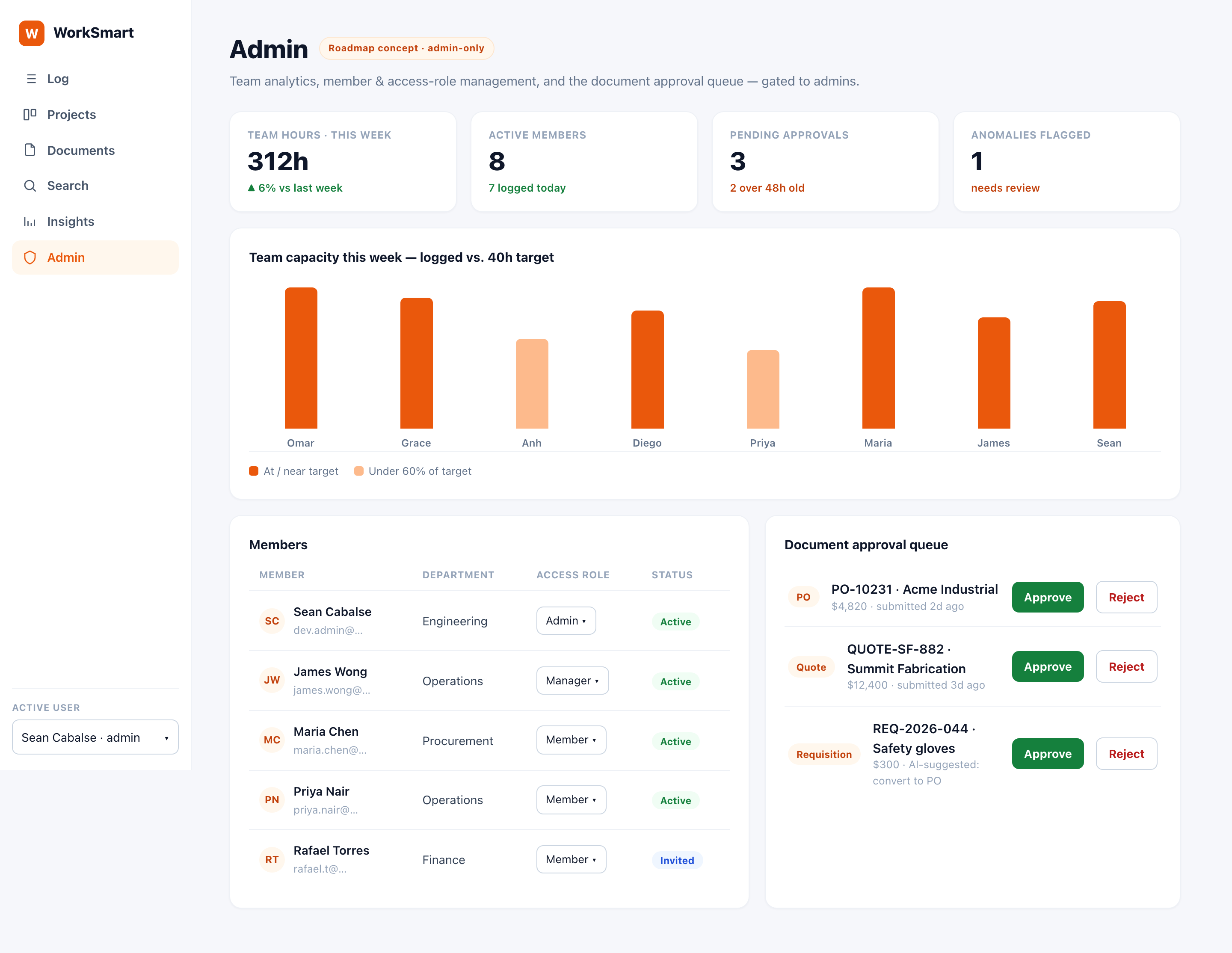
These three screens are non-functional concepts that illustrate direction. The shipped product is documented in the User Guide; the live interactive versions of these mockups live alongside the source.